Contamination
When the wrong items end up in your container, it can lead to environmental impacts, service delays, or additional charges.
To prevent contamination:
- review our sorting guides
- search specific items using whatbin
- contact us for assistance
If you received a notice about contamination and have questions, contact Customer Service for support.
What is contamination?
Contamination happens when items are placed in the incorrect container.
For example, black bags are not accepted in the compost. Food-soiled paper is not accepted in the recycling. Yard trimmings are not accepted in the trash.
Why does it matter?
State and local laws require residents and businesses to separate recyclable and organic material from trash. These laws aim to reduce environmental and climate impacts of waste.
If missorted material is collected as usual, it will contaminate clean material collected from other customers. This can result in recyclable or compostable material being landfilled. For example, when paper or cardboard gets contaminated with food or oil, it is harder to recycle, and may need to be landfilled instead.
When organic material ends up in the landfill, it emits methane, a powerful greenhouse gas. Learn more about the impact of composting versus landfilling organic material: Back to the Core: A Compost Story.
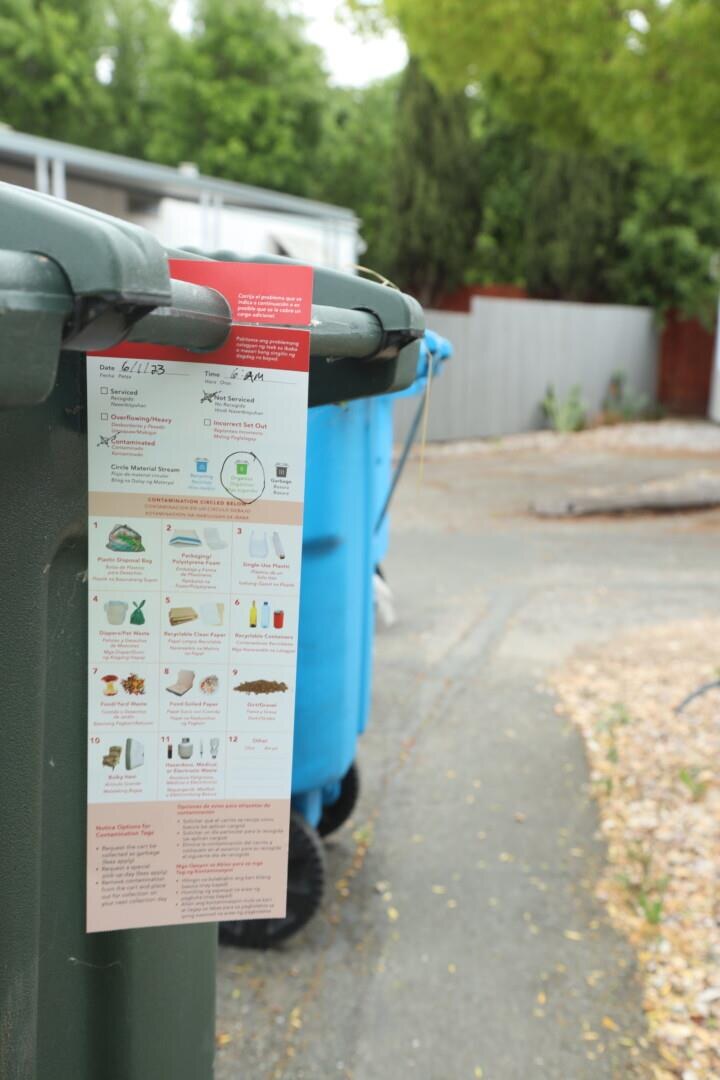
Contamination notices
If your container is contaminated, a tag may be left providing more information and next steps. If you received a tag and aren’t sure what’s next, contact us.