California
California Cont.
Oregon
Washington
Community Engagement

Waste Zero tabling event

Educating Our Communities

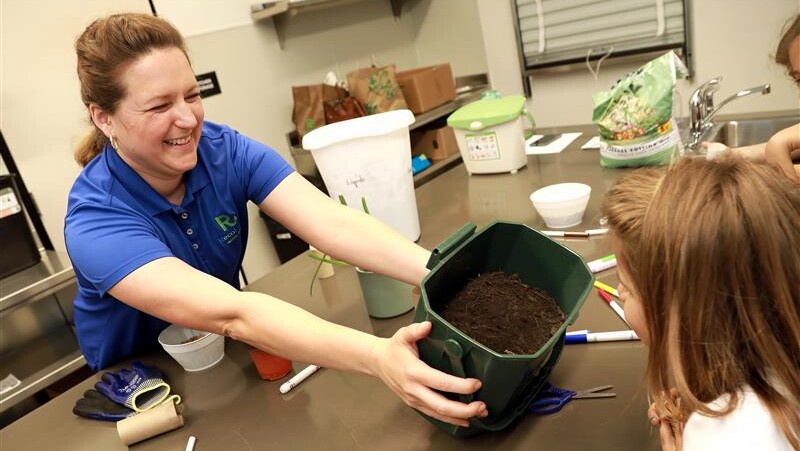
Our Waste Zero education and outreach teams educate and inspire communities to recycle and compost.

Working closely with local community leaders, Recology Waste Zero teams contribute to our long-term goal of waste reduction. Teams evaluate community needs and educate residents and businesses on recycling and composting best practices through site visits and consultations, trainings and presentations, facility tours, and more.


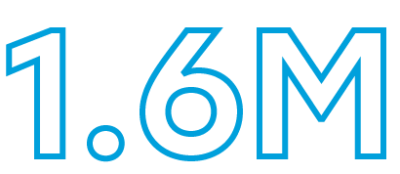
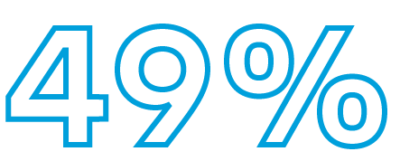
Waste Zero Activities in 2025
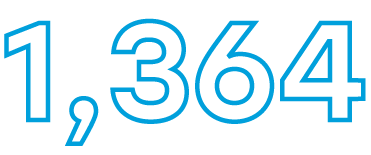
 

Trainings and presentations

Site visits and consultations
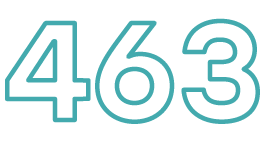
Tabling events
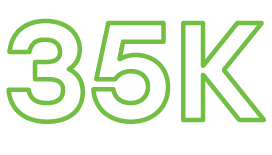
Waste reviews¹


Local Action, Lasting Change

We work hand-in-hand with communities to bring circular practices to life — from sports teams to city streets. These partnerships help create scalable models for sustainability that start locally and grow outward.

Recology Artists In Residence GLEAN Program

Challenging Perspectives Through Creative Collaboration

Recology’s Artist in Residence (AIR) Programs invite local artists to transform discarded materials into inspiring works of art. Since 1990, these programs have connected creativity with sustainability through exhibitions, tours, and community engagement. Now active in six locations, AIR reaches thousands each year—reimagining waste and reshaping how we see our world.
Recology Sacramento Kings Partnership

Backing the Sacramento Kings’ Sustainability Goals

As the official Sustainability and Zero Waste Partner of the Sacramento Kings through the 2027–28 season, Recology provides expert waste, recycling, and composting services at Golden 1 Center and Downtown Commons — supporting the Kings in meeting their sustainability goals with reliable, high-impact solutions.
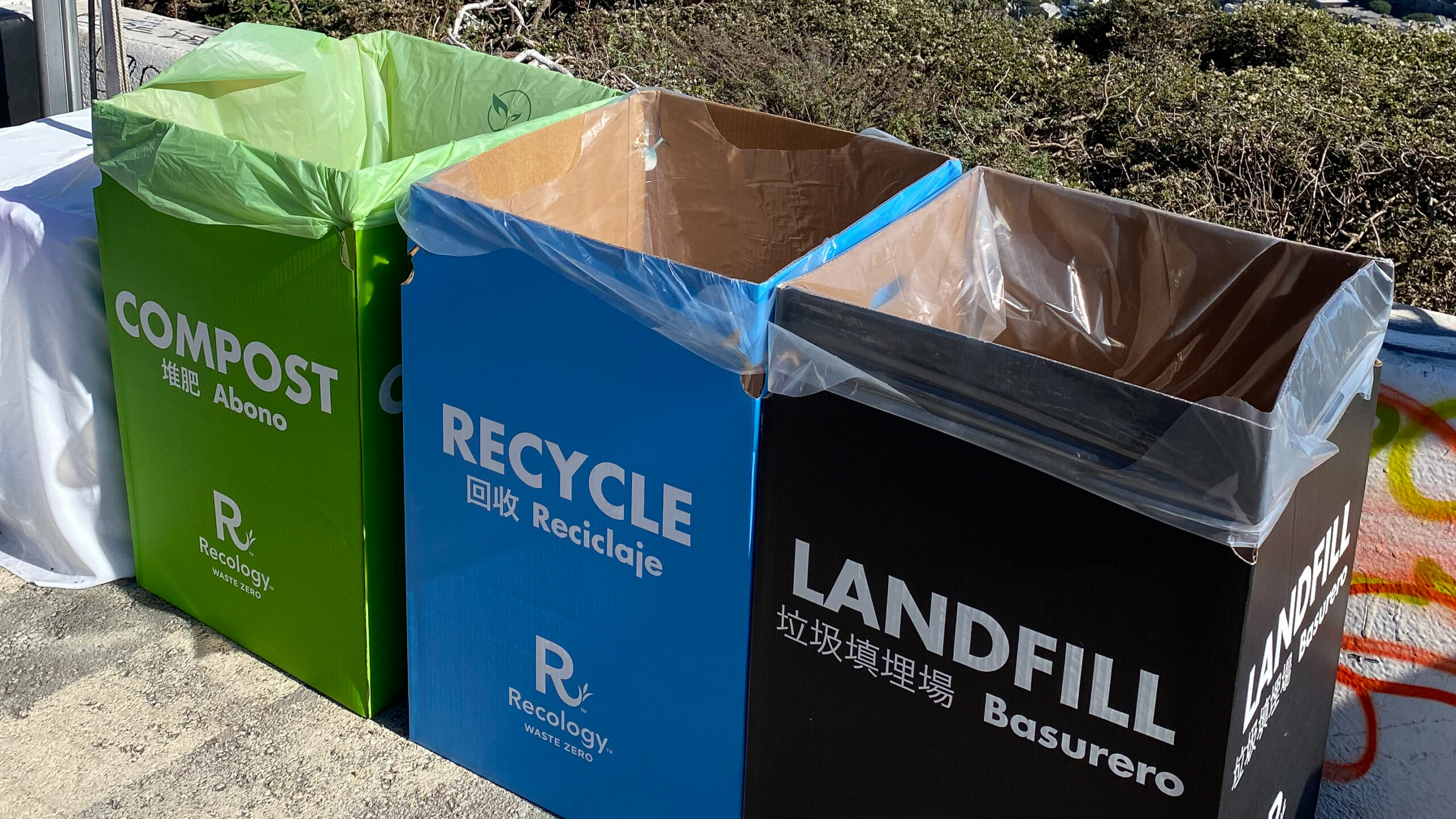
Driving Waste Diversion in SF

Driving Waste Diversion at Major Events

In San Francisco, Recology supports waste diversion programs at the Portola and Outside Lands music festivals, where Waste Zero staff lead planning and on-site coordination to improve recycling and composting performance. In 2025, these efforts diverted 266 tons of material from landfill increasing recovery rates by a combined 6 percentage points compared to the prior year.


Waste Zero tabling event

Interested in a free consultation for your business or community group?

We work hand-in-hand with businesses and communities to help support your waste diversion goals. Contact your local Recology Customer Service team to schedule a meeting.


¹ Waste reviews improve recycling and composting by identifying contamination and providing targeted education to customers.
Composting

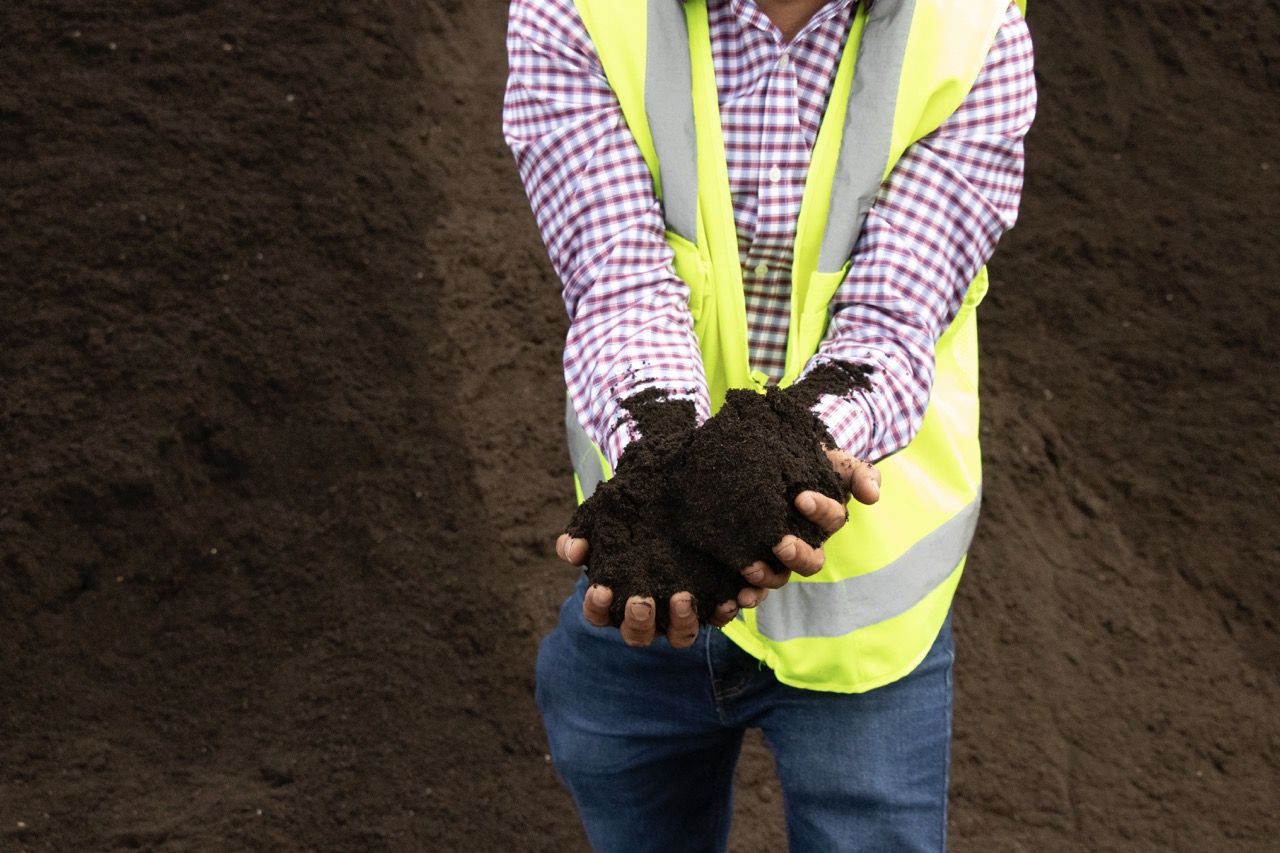
Compost in hands

Transforming Organic Waste into Climate Solutions

As the largest composter in Oregon and the owner of five composting facilities in California, we take food scraps and yard waste and transform them into nutrient-rich compost that supports healthy soils and climate resilience. Our compost helps sequester carbon, improves soil structure, retains water, and promotes regenerative growing practices across agricultural landscapes.


Each year, Recology produces more than one million tons of compost, returning organic material back to the land as a nutrient-rich soil amendment. This compost supports farms, vineyards, and land managers across the region—strengthening local food systems and completing the circular journey from waste to renewed resources.

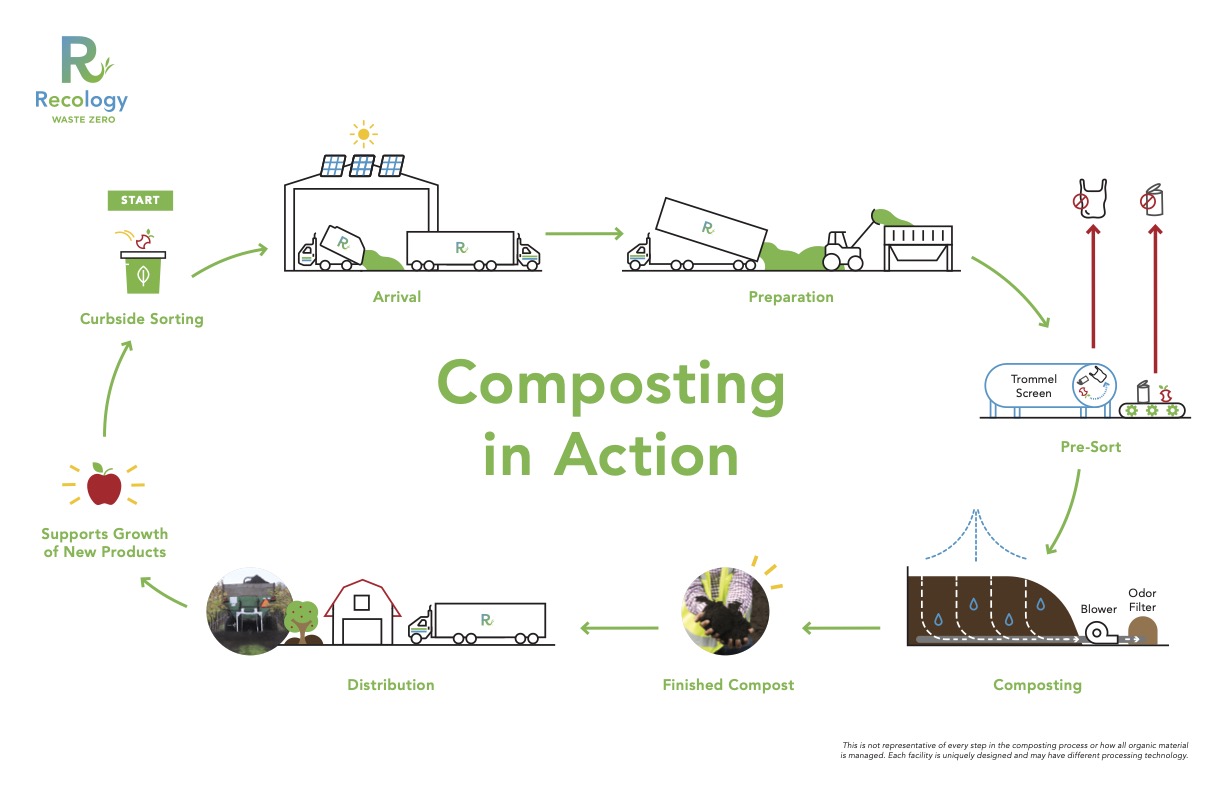
This schematic is not representative of every step in the composting process or how all organic material is managed. Each facility is uniquely designed and may have different processing technology.

Our Network of Organics Facilities

By collecting and processing yard trimmings and food scraps, Recology produces compost, soil blends, and a variety of mulches. Our closed-loop processes in California and Oregon produce nutrient-rich soil amendments that help fight climate change.


Composting Combats Climate Change

Recycling

Recycling

Supporting Sustainable Supply Chains

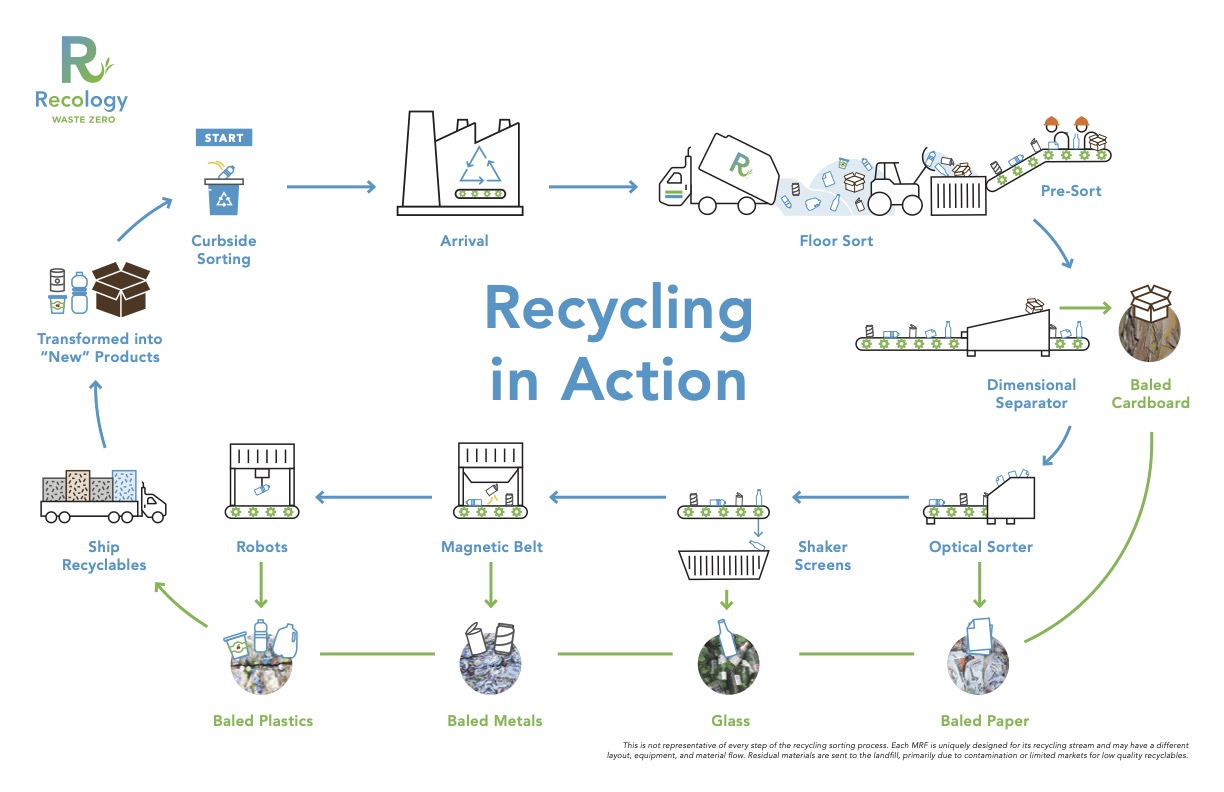
At Recology, recycling is more than a process—it’s a commitment to recovering valuable materials and keeping them in use. Every day, our network of Material Recovery Facilities (MRFs) and transfer stations keeps materials in circulation, lowering carbon emissions and reducing reliance on virgin resources.

In 2025, we processed nearly 400,000 tons of recyclable materials at our facilities.


Material Recovery Facilities

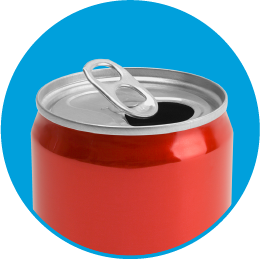
Recology owns and operates 11 Material Recovery Facilities (MRFs) that specialize in sorting recyclables into high-quality recyclable commodities, like fiber, glass, metal, and more.

Santa Rosa Material Recovery Facility

Santa Rosa MRF

Our Santa Rosa, CA MRF processes around 400 tons of materials every day at a recovery rate of 85%.

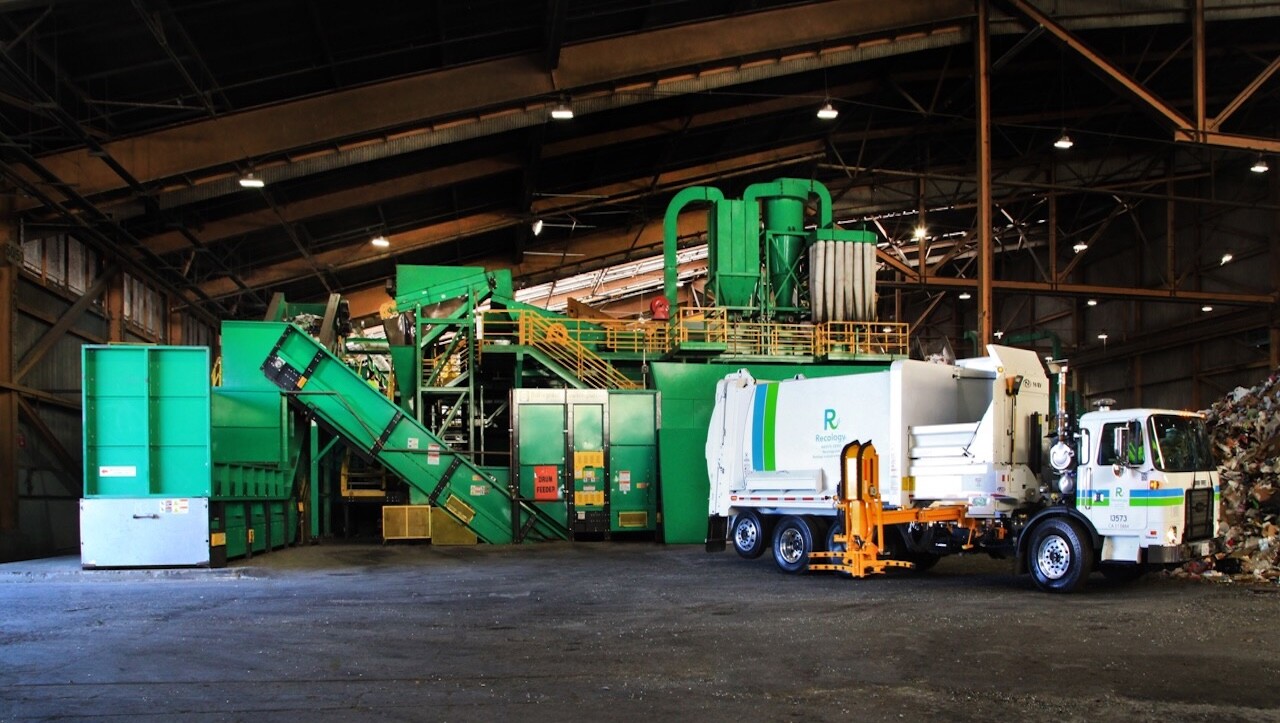
Recycle Central facility

Recycle Central

Our Recycle Central facility at Pier 96 in San Francisco, CA covers 185,000 sq ft and sorts an average of 500 tons of materials per day.

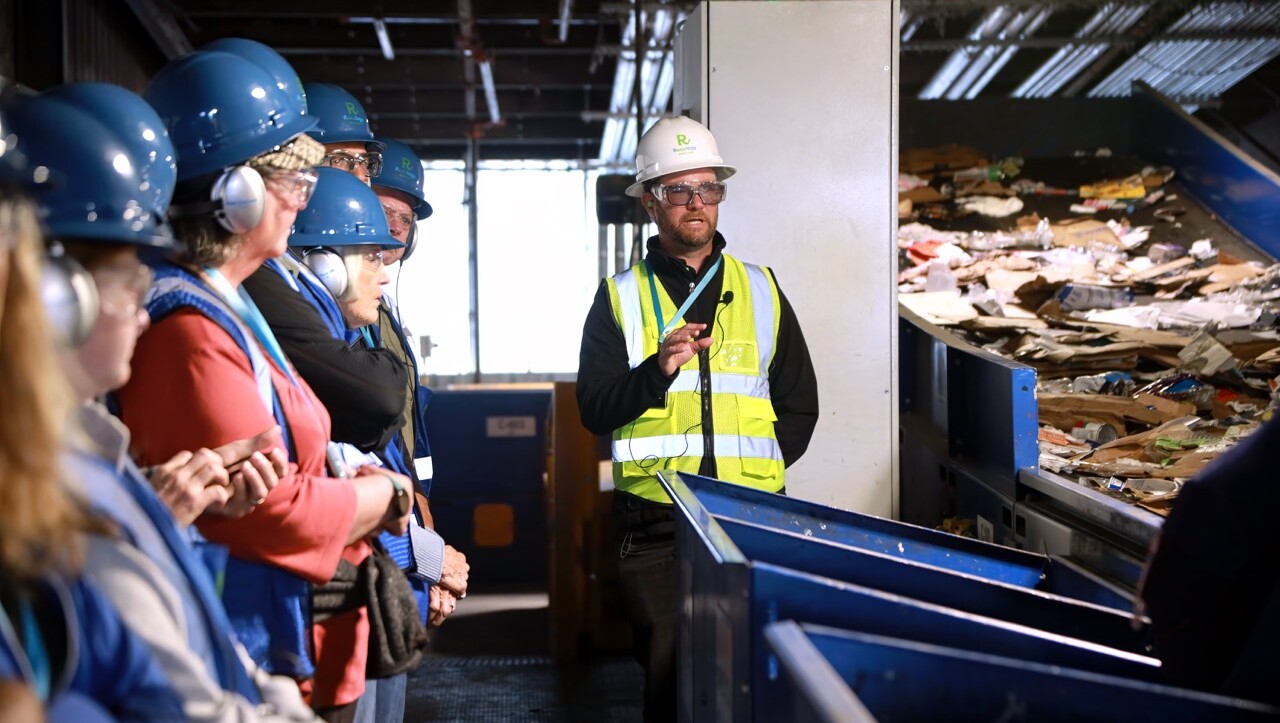
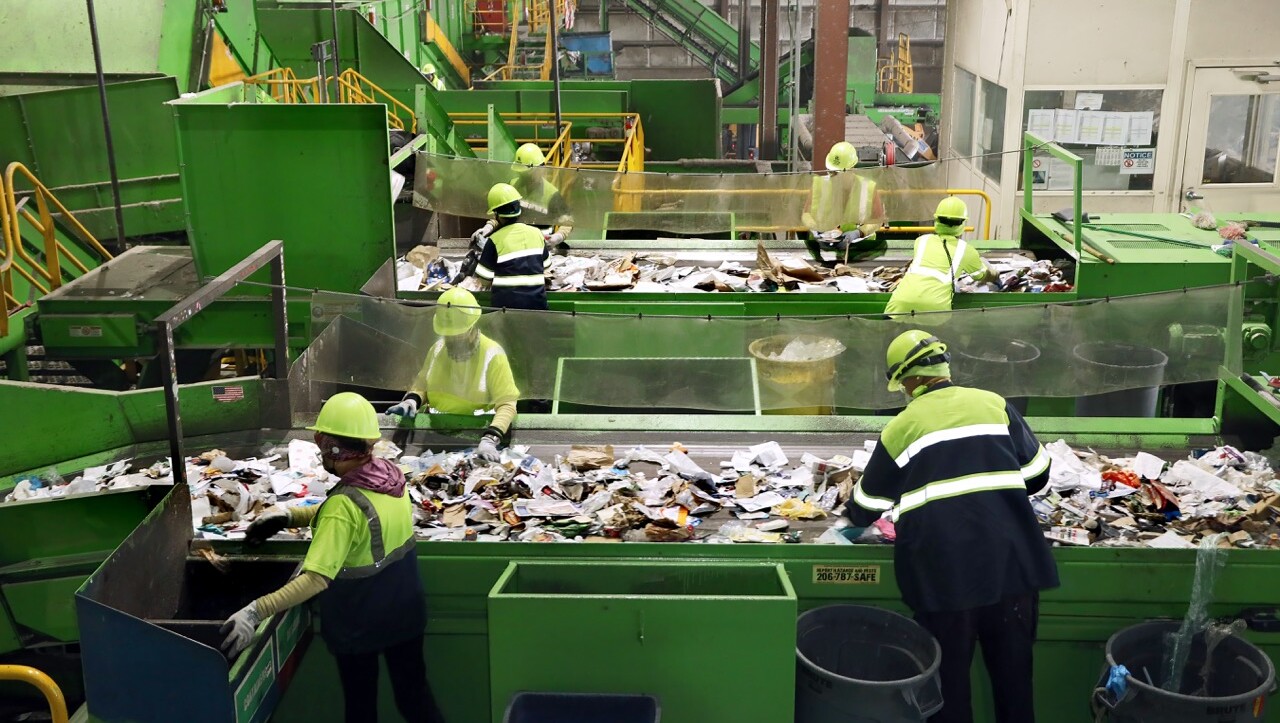
Sorters in a recycling facility

King County MRF

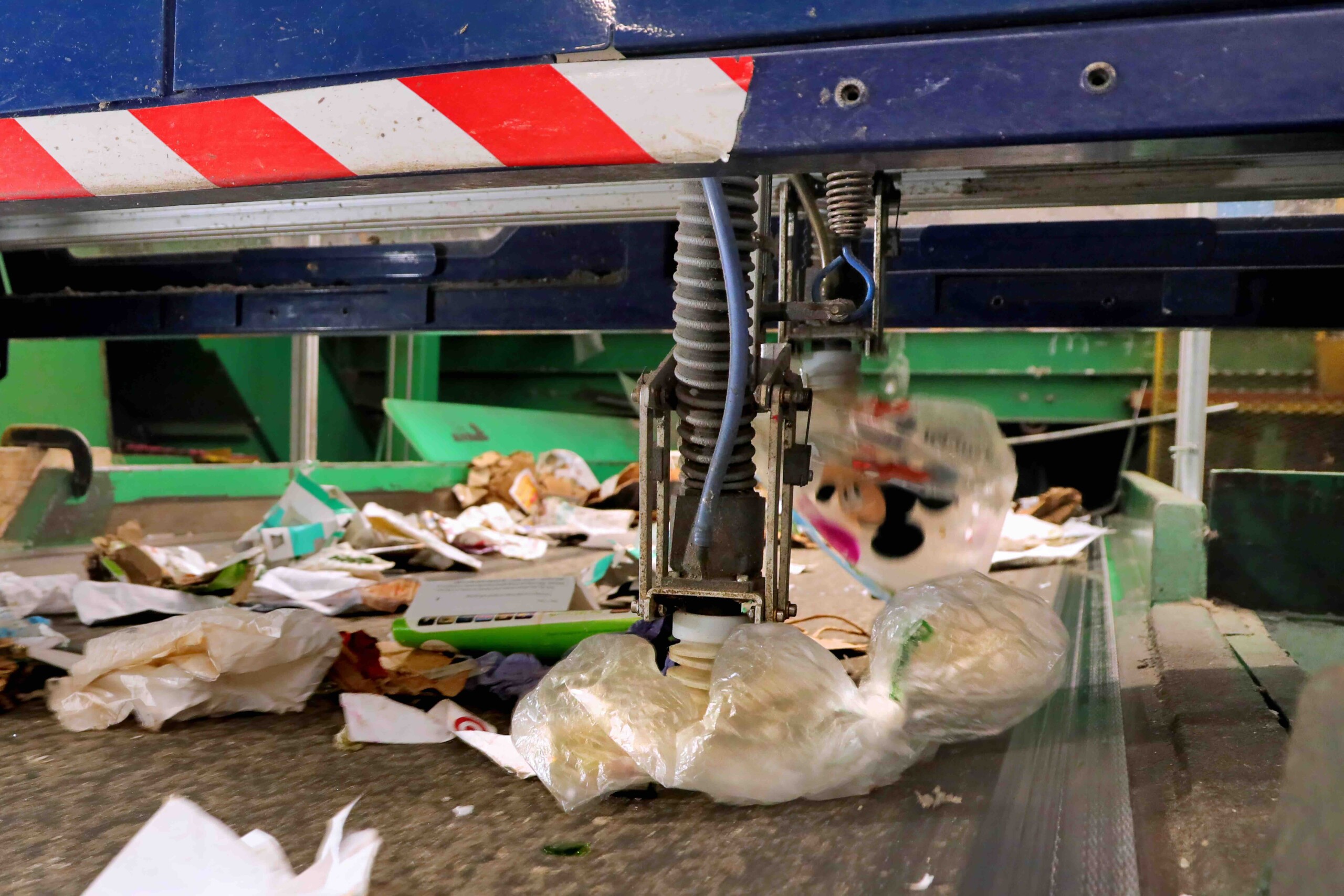
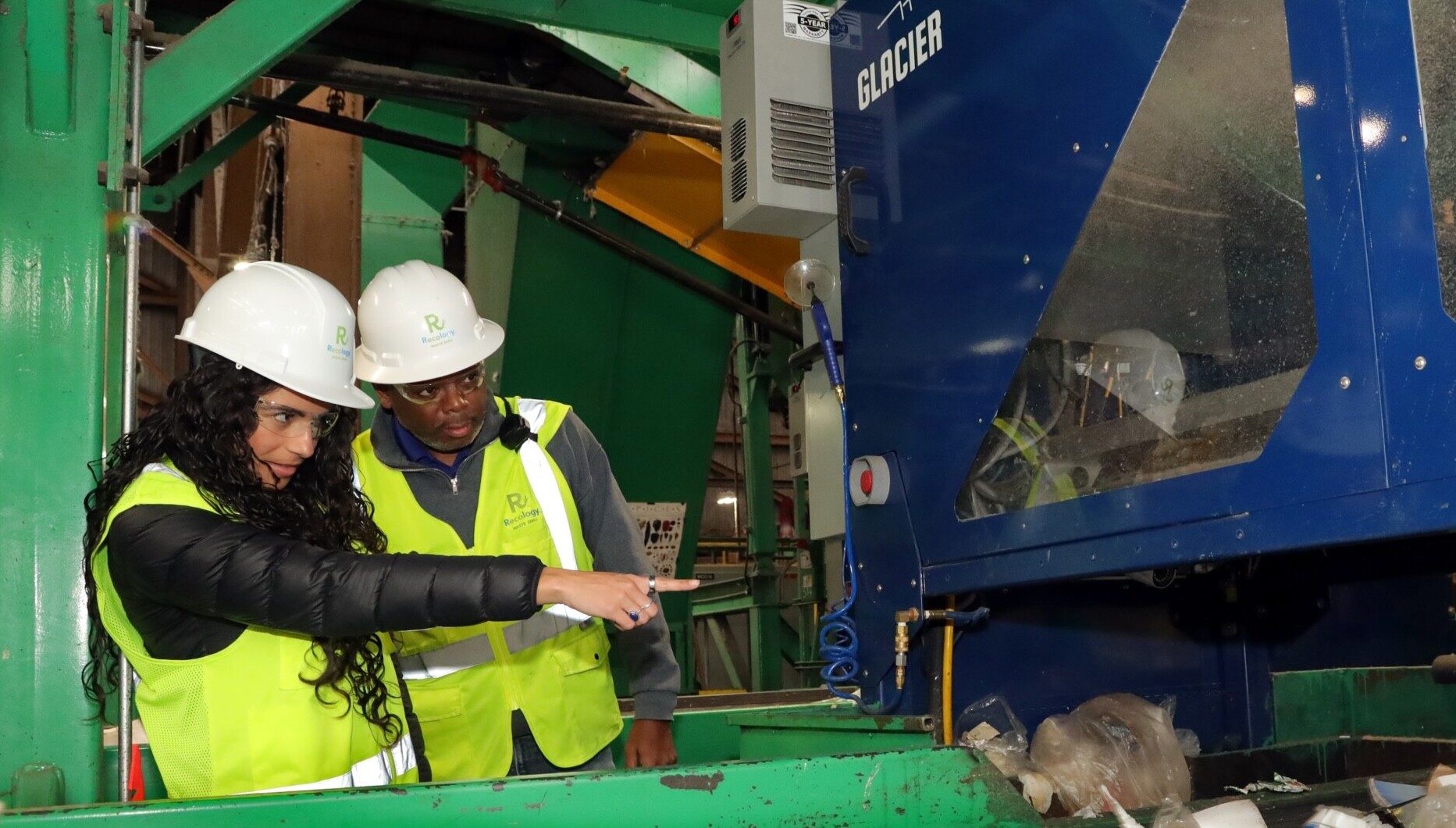
Our King County MRF in Seattle, WA sorts up to 40 tons of recyclables per hour with the help of AI-enabled robotic sorters.
This schematic is not representative of every step of the recycling sorting process. Each MRF is uniquely designed for its recycling stream and may have a different layout, equipment, and material flow. Residual materials are sent to the landfill, primarily due to contamination or limited markets for low-quality recyclables.


Top Commodities Processed in 2025

organics

Organics

1,180,030 tons

paper and cardboard

Paper & Cardboard

227,459 tons

Glass

Glass

59,836 tons

Scrap metal

Metals

44,289 tons

Construction debris

Construction Debris

28,484 tons

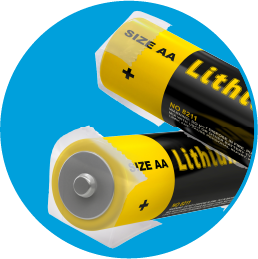
batteries

Batteries

270 tons

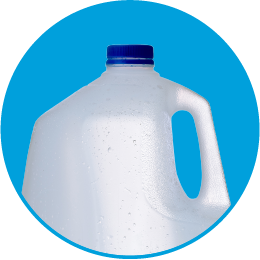
Plastic

Plastics

16,257 tons

Electronic waste

Electronics

2,182 tons

Broken Washer

Appliances

719 tons


Sustainable Operations

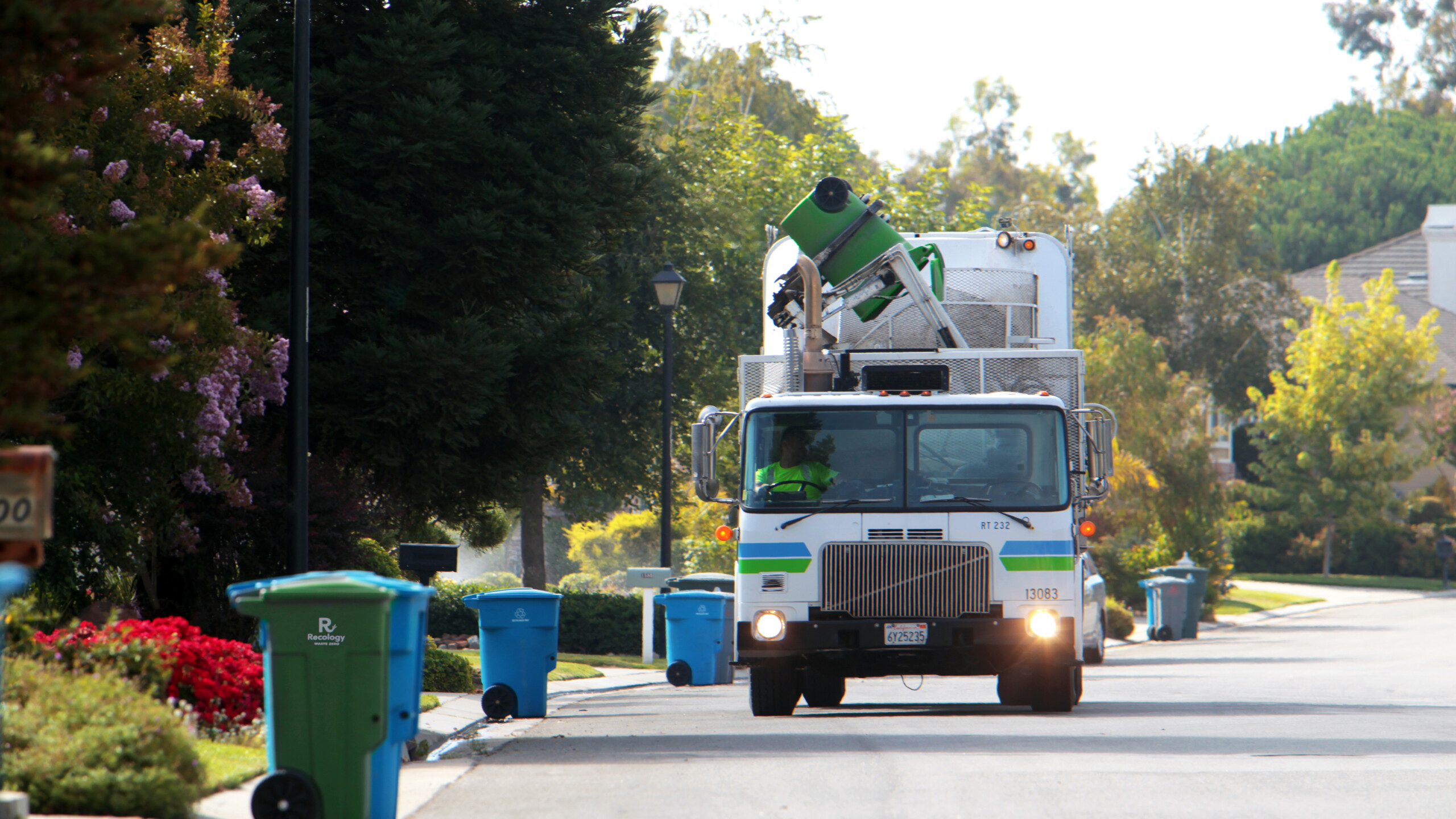
Collection truck

A Partner in Climate Action

At Recology, we’re a strategic partner to cities and communities working toward ambitious climate goals. Our sustainability-driven model diverts resources from the landfill and emissions from the atmosphere—delivering built-in climate benefits. Our operations are designed to safeguard the environment and accelerate the transition to a more sustainable, low-carbon future.

Climate Benefits

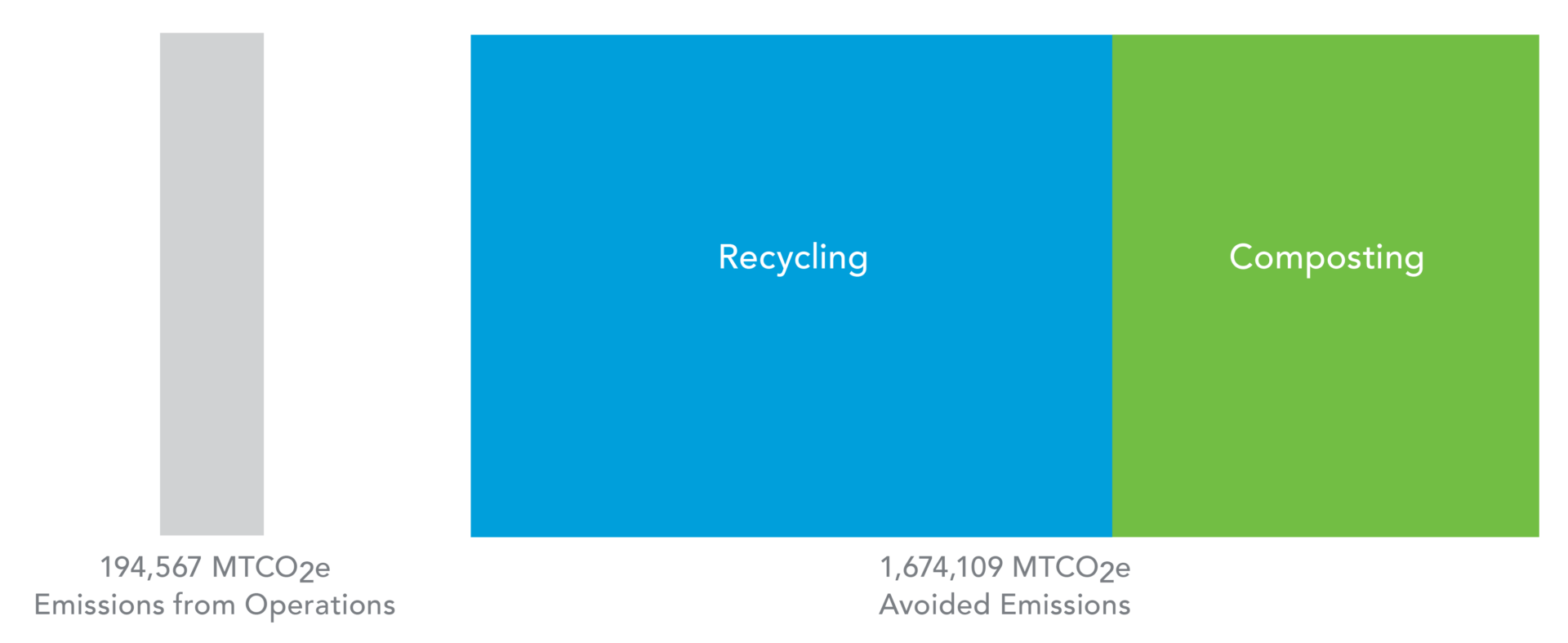
In 2025 alone, Recology helped avoid the release of 1.7M metric tons of greenhouse gases by processing recyclable and compostable materials instead of sending them to landfill. That’s 9X more than the greenhouse gas emissions produced through our operations.1

Our 2028 Targets

We’ve set ambitious goals to reduce our carbon footprint by 2028, focusing on key areas such as landfills, fuels, and facility energy.
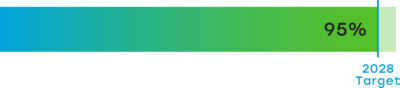
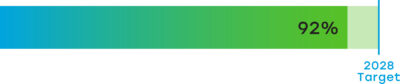
In 2025, 95% of Recology’s fuel use came from renewable or alternative sources, achieving our 2028 target three years early. By transitioning to cleaner options, we’ve reduced fuel-related emissions by 84% since 2018 and accelerated progress toward a lower-carbon future.


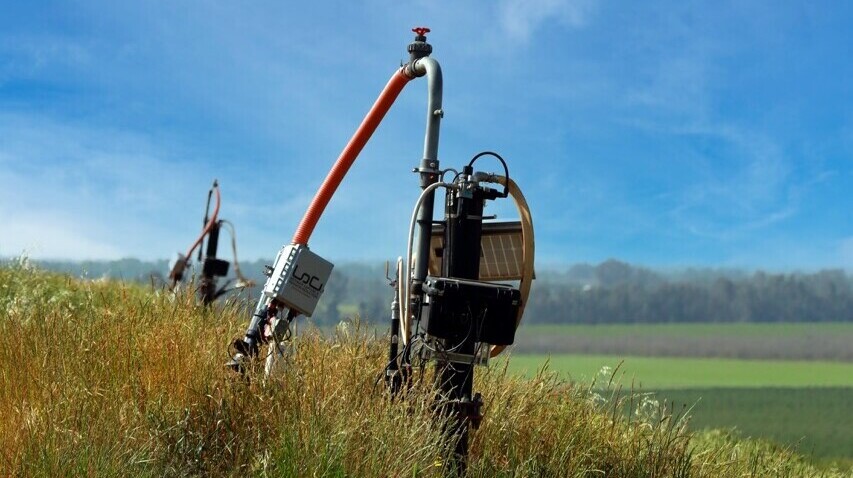
Landfill to gas energy

Landfills

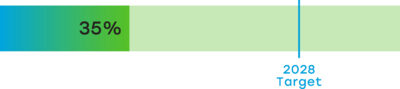
2028 Goal: Use 75% of collected landfill gas to generate renewable energy.

2025 Progress:

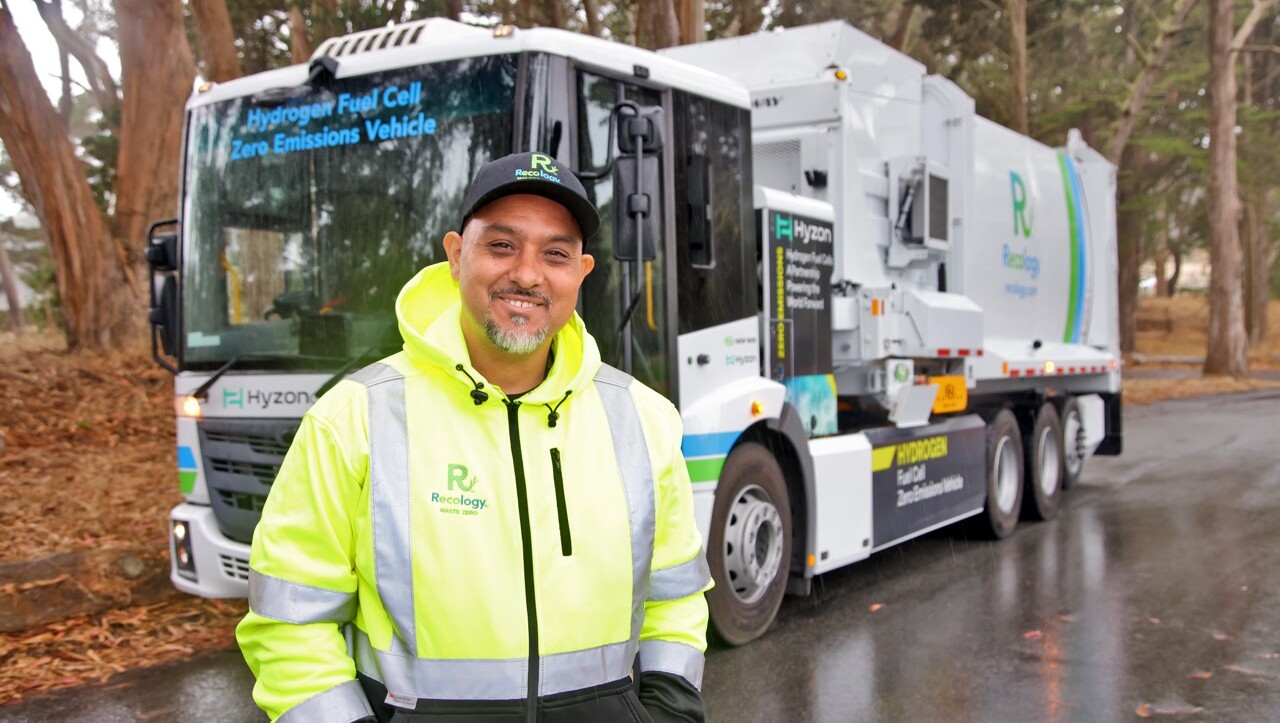
Hydrogen fuel cell vehicle

Fuels

2028 Goal: Power our vehicles and equipment with 95% renewable or alternative fuels.

2025 Progress:

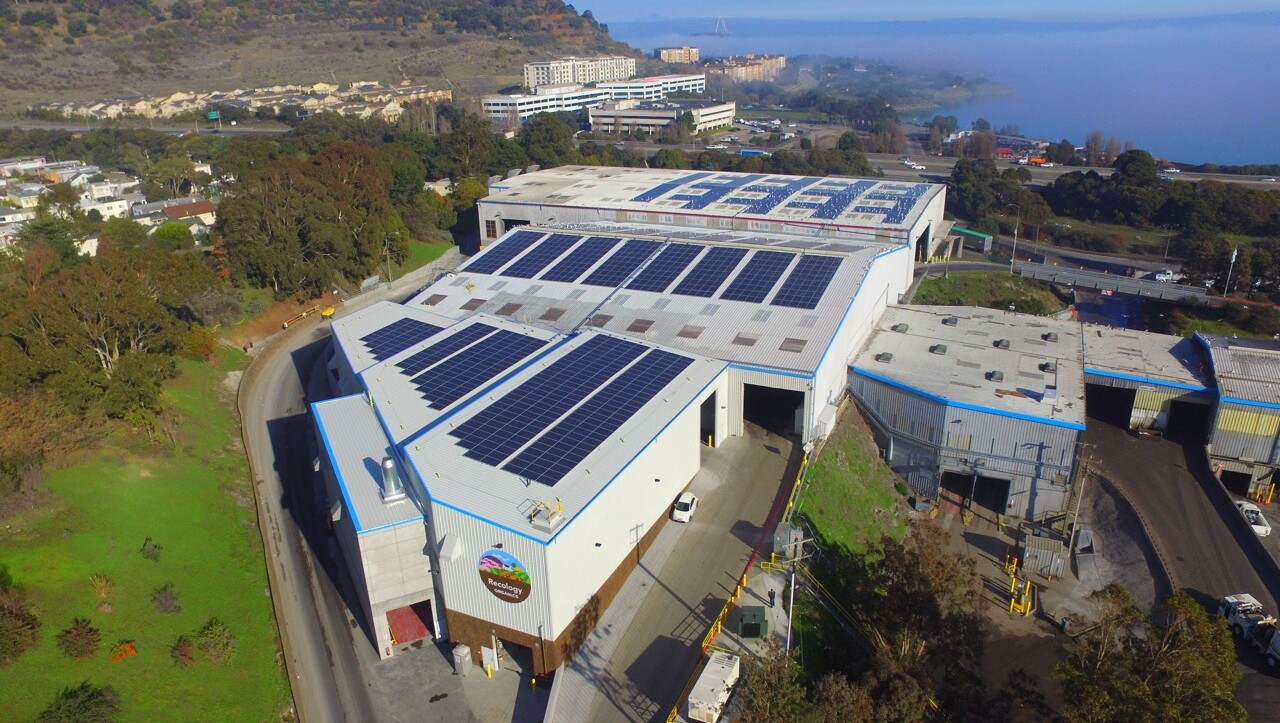
Recology Facility

Facility Energy

2028 Goal: Power our Recology facilities with 100% renewable or carbon-free electricity.

2025 Progress:


1 Emission avoidance values were calculated using the US EPA Waste Reduction Model (WARM, 2023) for recyclable material and the California Air Resources Board Composting Emission Reduction Factor (CERF, 2017) for compostable material. The 10x ratio divides total emissions avoided by our combined scope 1 and 2 emissions.

Technology & Innovation

Our Approach to Innovation

Innovation helps us push the boundaries of resource recovery—from testing emerging technologies to forging partnerships that reimagine how materials are recovered and reused.

Recology AI Robots Capturing Contamination


Technologies We Leverage

Recology Hydrogen Fuel-Cell Zero Emissions Collections Truck

Zero Emissions Vehicles

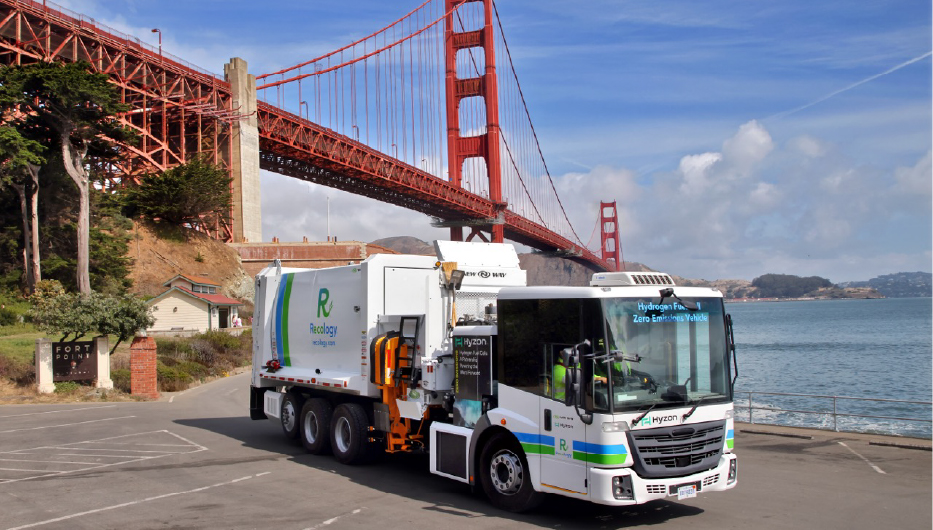
Recology collaborates with our communities and industry partners to pilot and test zero emissions vehicles—from purchasing our first electric collection vehicles in 2019 to piloting North America’s first hydrogen fuel cell-powered electric refuse truck in 2024. As we work with manufacturers to continue improving these technologies, we are drastically reducing our fuel-related emissions by transitioning to renewable and alternative fuels.

Recycle Central facility

AI-Enabled Robotics

Recology works with innovative technology partners to deploy AI-enabled robots at several of our Material Recovery Facilities. The robots use advanced computer vision and smart robotic arms to efficiently identify and sort a range of recyclable materials. By automating the sorting process, these AI systems help us reduce contamination, recover more materials, and improve worker safety while providing real-time data to align operations with market demand.

Landfill meter

Landfill to Gas Energy

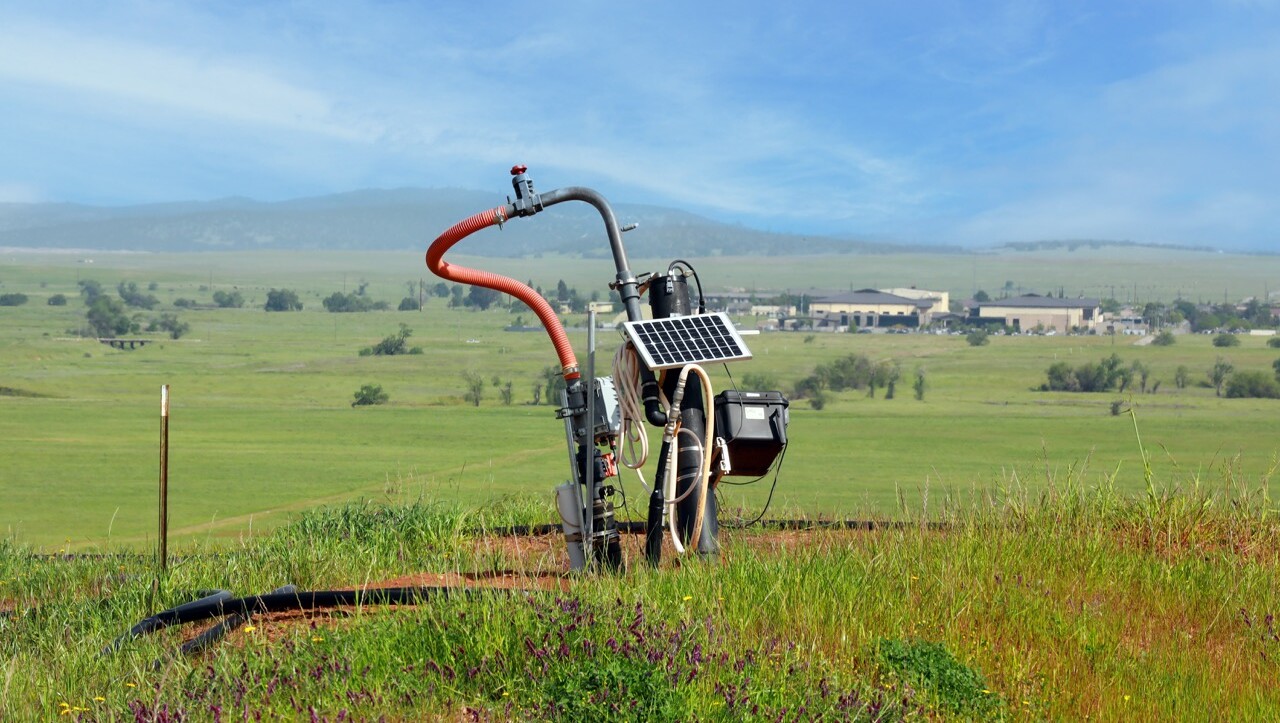
Landfill gas collection systems are critical to reducing landfill emissions. Recology uses real-time data and automated landfill gas control systems to optimize gas collection, allowing us to capture more methane for renewable energy generation.

ASP

Aerated Static Pile (ASP) Composting

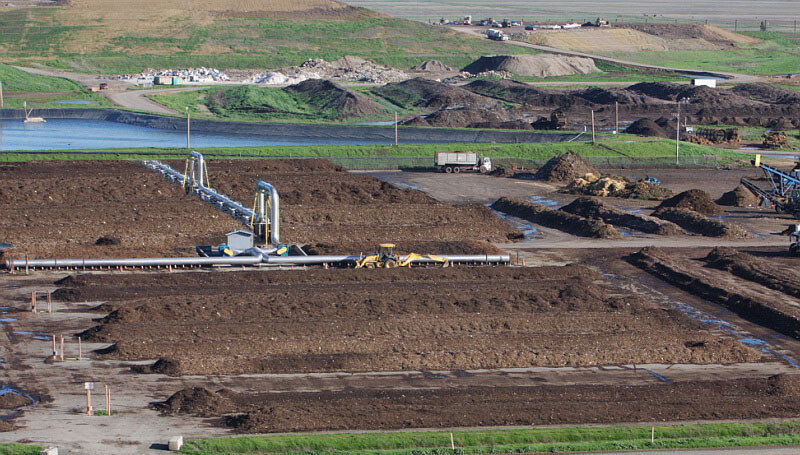
High-quality compost needs added water and air. With an ASP System, organic material sits on perforated pipes, which pull or push air through to better control moisture, oxygen, and microbial levels. Collected air is processed through a bio-filter, which absorbs odors and volatile organic compounds.


Partner with Us

We are always looking to pilot innovative technologies that could transform resource recovery or reduce emissions. Have a technology or groundbreaking idea you would like to pilot at Recology? Contact Us.


Commodities

Partnering with Like-Minded Manufacturers

After we sort and recover resources from the compost and recycling containers, the next step is finding ideal uses for these materials, or commodities. That means finding manufacturers who commit to using our commodities for the best and highest use – those who are using our commodities to create further recyclable goods that will continue the recycling chain.

We’re always looking to build relationships with like-minded commodities partners and manufacturers. Contact us to find out more about recovering resources together.

Bill Pay

Are you a recycled commodity customer? Pay your bill online.

Are you an organics commodity customer? Pay your bill online.

Sustainability at Recology

From Our CEO

“For decades, Recology has helped define what resource recovery can look like in practice. Today, we are building on that legacy by creating stronger circular systems and advancing sustainable operations.

From the fuel we use, to the materials we recover, to the services we provide in more than 130 communities, our work is part of a larger system: helping communities reduce waste and keep resources in use.”


Salvatore Coniglio
Chief Executive Officer


2025 Key Achievements

Tons diverted from landfills¹

More greenhouse gases avoided through recycling and composting than generated by our operations²

More resources recovered than discarded in our landfills, by weight


Collection truck

Sustainable Operations

We mitigate emissions by converting landfill gas to energy and powering our fleets and facilities with renewable and carbon-free energy.

Recycle Central facility

Technology & Innovation

Through investing in technology and innovation, we mitigate our carbon emissions and boost material recovery and recycling rates.

Waste Zero Tabling event

Community Engagement

Our Waste Zero education and outreach teams educate and inspire communities to recycle, compost, and reduce waste where they can.

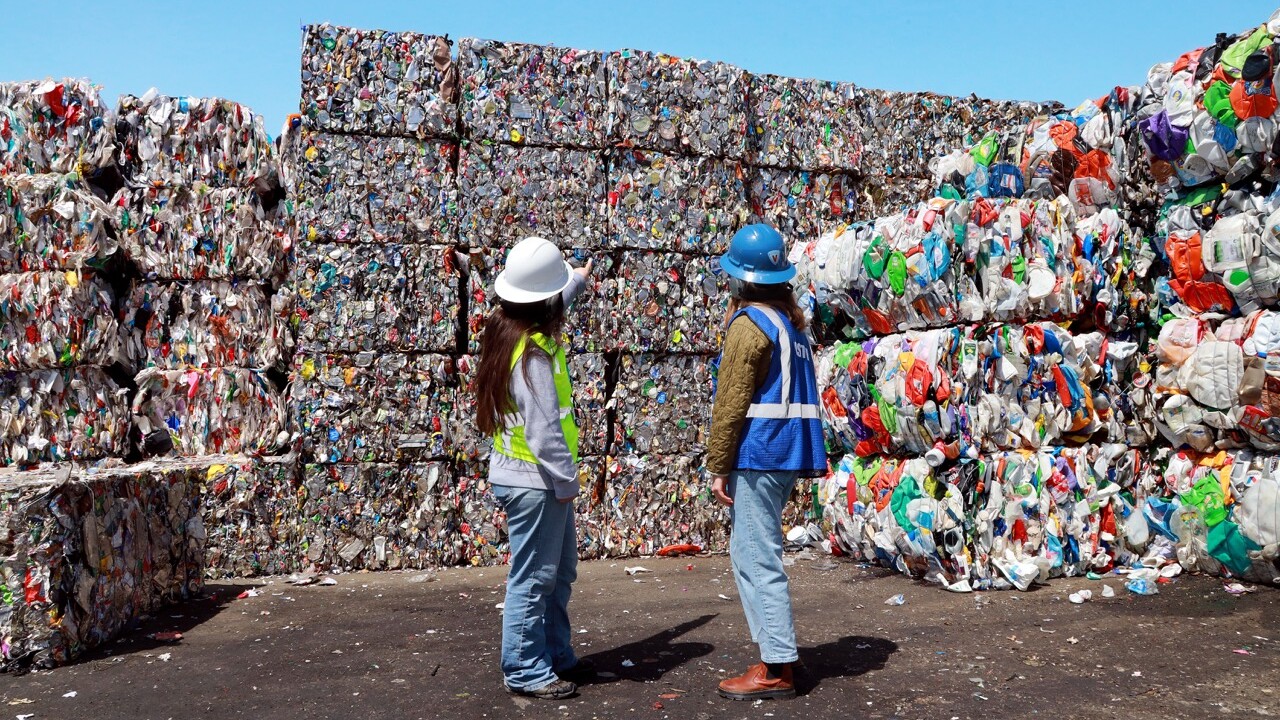
People in front of recyclables

Recycling

Recology’s Material Recovery Facilities optimize the process of sorting materials into high-quality recyclable commodities.

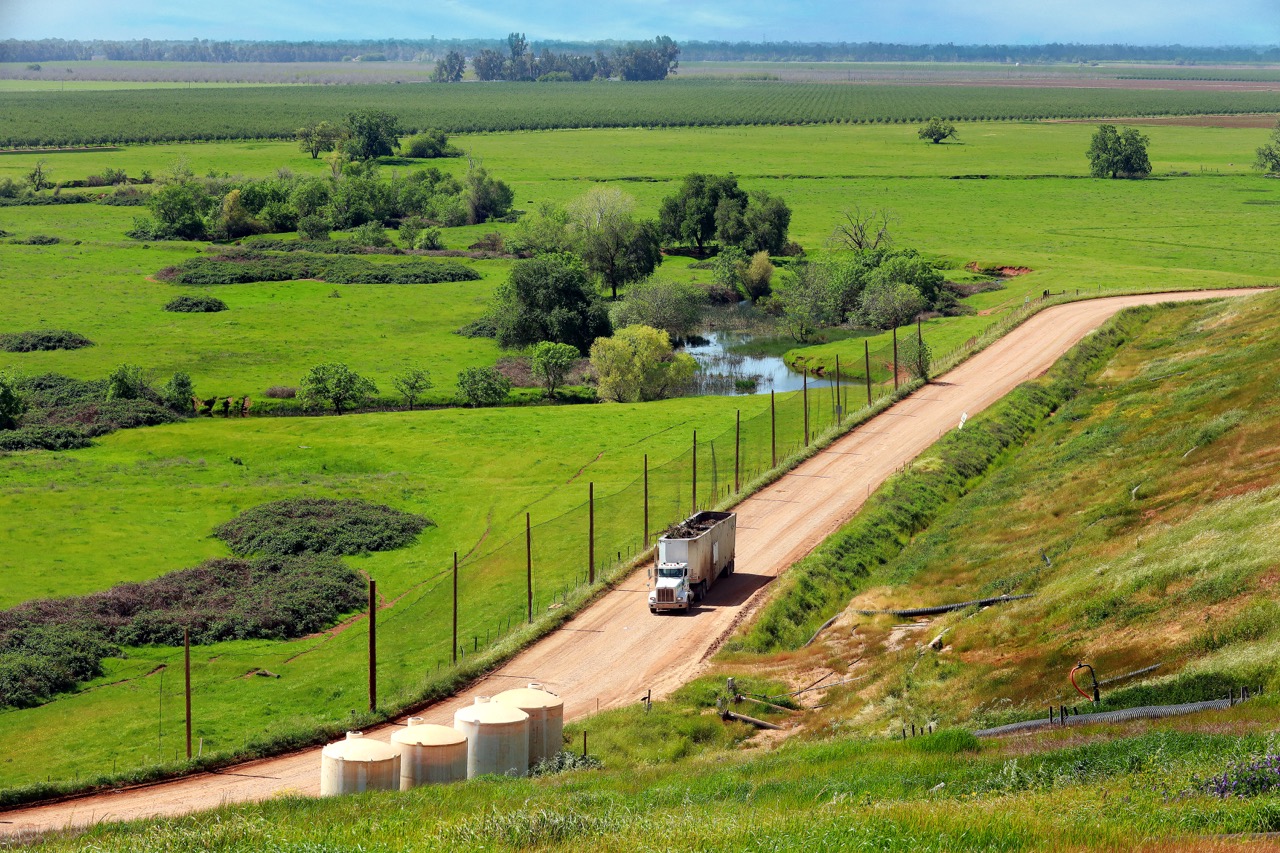
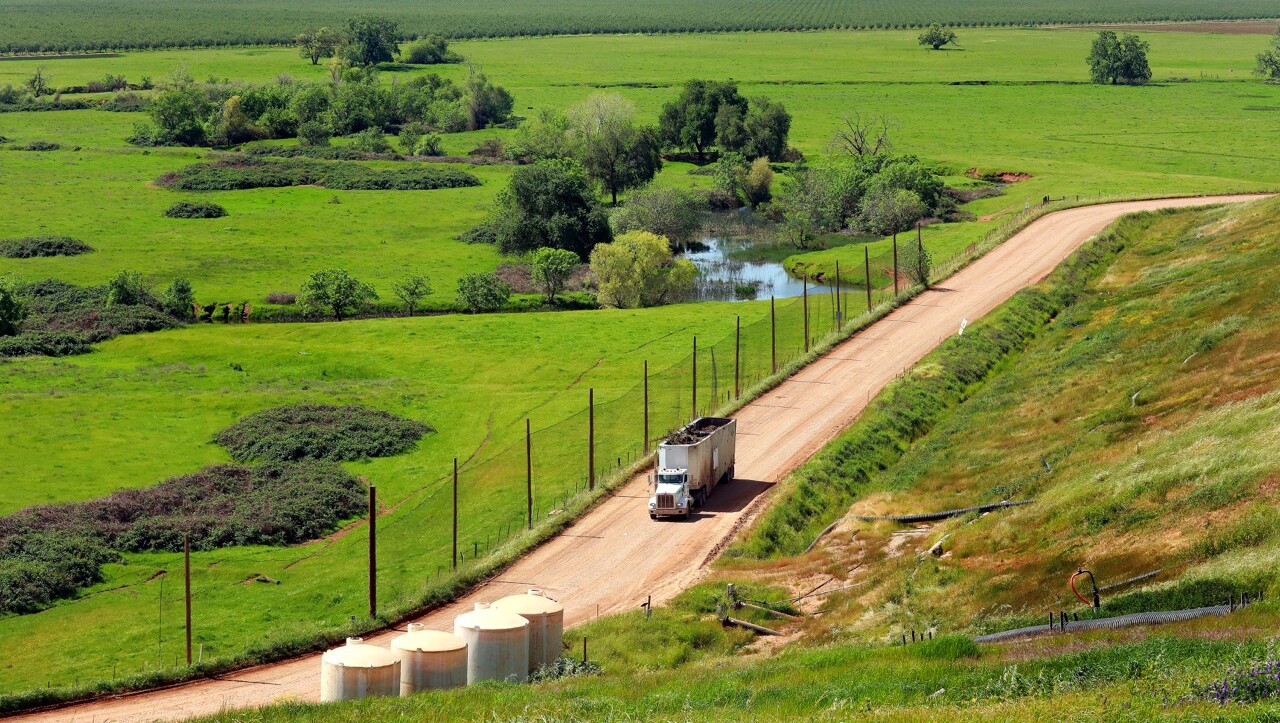
Truck traveling to composting facility

Composting

We divert significant amounts of organic waste from landfills, transforming yard trimmings and food scraps into nutrient-rich soil amendments.


¹ Total recyclable material includes all recyclable materials Recology processed at our material recovery facilities (MRF) or transfer stations and sent to third-party recyclers or MRFs. Total compostable material includes all organic materials Recology processed at our composting or mulching facilities, or our transfer stations before being composted at third-party facilities. Both exclude residuals sent to landfills.
² Emission avoidance values were calculated using the US EPA Waste Reduction Model (WARM, 2023) for recyclable material and the California Air Resources Board Composting Emission Reduction Factor (CERF, 2017) for compostable material. The 10x ratio divides total emissions avoided by our combined scope 1 and 2 emissions.