Work by Mark Brest van Kempen, Tianzong (TZ) Jiang, and California College of the Arts undergraduate creative duo Wacala! Studios.
The Artist in Residence Program (AIR) at Recology San Francisco is thrilled to announce exhibition dates for current artists-in-residence Mark Brest van Kempen, Tianzong (TZ) Jiang, and California College of the Arts undergraduate creative duo Wacala! Studios.
Friday, May 15, 2026 from 5–8 PM
Saturday, May 16, 2026 from 12–3 PM
Tuesday, May 19, 2026 from 5–7:30 PM with artist talk by Wacala! Studios at 6 PM (401 Tunnel), Mark Brest van Kempen, at 6:30 PM (503 Tunnel), and Tianzong (TZ) Jiang at 7 PM (503 Tunnel).
Admission is free and open to the public, no reservation required. All ages are welcome and the site is wheelchair accessible.
Location
Recology Art Studios
503 and 401 Tunnel Avenue, San Francisco
 Mark Brest van Kempen
Mechanical Mambo: Possession and Dispossession in the Material World
Written by Weston Teruya
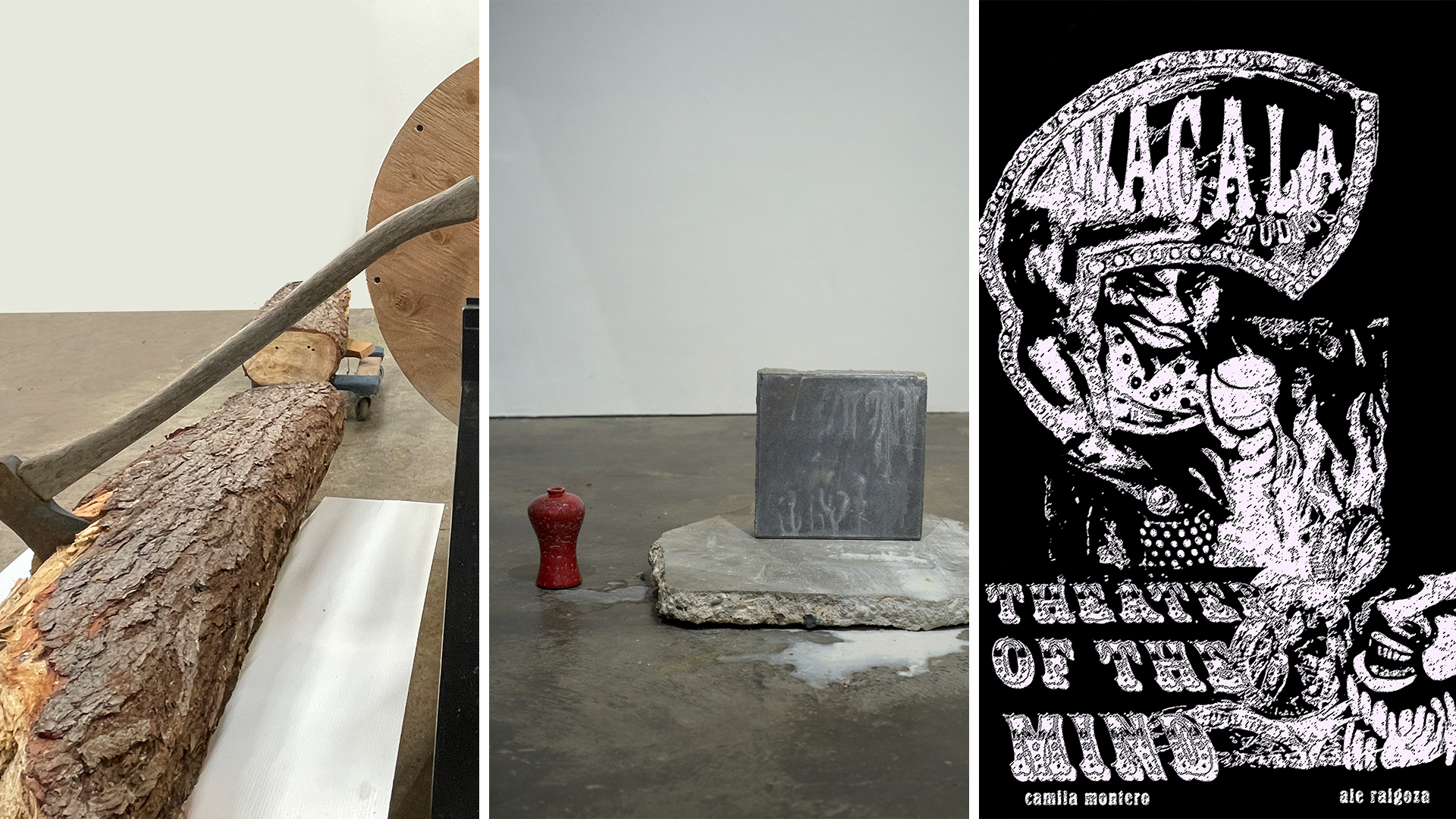
Mark Brest van Kempen’s Mechanical Mambo: Possession and Dispossession in the Material World is a kinetic sound sculpture that traces the long arc of material history often hidden within mundane objects. The project centers on a large-scale percussion instrument that resembles the ghostly approximation of a felled tree. This pieced-together assembly tells the narrative of nation-building economics: “a tree can’t be cut down until you own the property.” The segments of the sculptural tree evoke stages in the process of creating wooden commodities–the natural landscape must be claimed, named, and divided into parcels to be extracted from; an ecosystem of forests must be razed and turned into logs, graded and planed into lumber, and shaped with a lathe into parts for objects like a chair. This is a song of partitions and segmentation, binaries of nature and the built environment, property and the wilds, and resources to be consumed or set to the side for preservation. Each stage of the process has been enabled by systems of labor and knowledge that are hidden within everyday things.
The automated instrument hammers out a mambo, a musical form with its own complex history. It begins with roots in Africa, brought to Cuba by enslaved people on Transatlantic trade routes where they cultivated it into the complex rhythms that were later carried with the diaspora to New York. The constituent components of the percussion, which include rail ties, spikes, and gas cans, speak to the legacy of labor that underlies this music and the economic systems that wielded those tools, while also giving the soundtrack a harsh, piercing texture. There is a beauty and deep cultural tradition of craft and creative innovation in these forms, and Brest van Kempen reminds us to remain attuned to their complexities.
Combining Conceptual Art, Land Art, and Social Practice, Brest van Kempen’s varied sculptures and performances often use the landscape itself as sculptural material. He has received numerous commissions for permanent public art projects, including from the San Francisco Arts Commission, University of California, the City of Palo Alto, the City of Seattle, and the Haas Foundation. His work has been presented in several books, including Lucy Lippard’s The Lure of the Local and Peter Selz’s Art of Engagement, as well as publications including Time Magazine, The New York Times, Art in America, and the Los Angeles Times. He was an artist in residence at the Dalsland Museum in Sweden and the Headlands Center for the Arts in Sausalito, CA. His work is included in various collections including the Los Angeles County Museum of Art (LACMA), Berkeley Art Museum and Pacific Film Archives (BAMPFA).
 Tianzong (TZ) Jiang
Polishing Brick into Mirror
Written by Weston Teruya
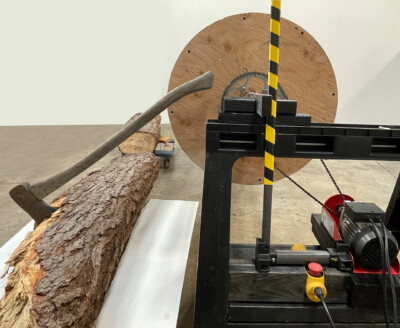
Deeply informed by his meditation practice, Tianzong Jiang’s Polishing Brick into Mirror presents an expansive range of pieces that emerge from a daily process of reflecting on themes including imperfection, detachment, and transience. In a series of videos documenting short performances, he carries out laborious tasks, such as a gesture from the story of a Zen master who attempted to polish a brick into a mirrored surface through meditative grinding of stone against stone. In other performances, he carries out Sisyphean tasks like sweeping or mopping the trash strewn on the dusty floor of the Public Reuse and Recycling Area additionally evoking the work of Recology AIR founder, Jo Hanson. The implied endpoint of those actions–a ‘clean’ recovery site floor or a polished stone mirror–is impossibly distant or imaginary. The seemingly endless futility of his gestures suggests the process of being in the moment, the endurance needed to carry out incremental changes, or as with Hanson, the collective mobilization needed to make these shifts.
In another series, Jiang gathers toy soldier figurines and attempts to force their legs into a sitting sutra position mimicking Arhat monk statues, trying to transform them from objects of aggression into symbols of meditative contemplation. Not built for this kind of manipulation, some of their legs break or pose imperfectly, awkwardly attempting to hold positions beyond their initial design. The actions also ask us to consider the value of “perfect imperfections.” Perhaps the floor is in the proper state for it to function as an active place for gathering and recycling material. The transformation of the toy soldiers reflect the in-between of the struggle toward transformation. This is not just an acceptance of what is, but an engaged and incremental practice of moving us toward a new awareness.
Jiang is an interdisciplinary artist and filmmaker based in the Bay Area. As an artist with a Chinese American background, he explores the intricate relationship between culture, identity, and history, creating experimental interventions and idiosyncratic performances that undermine the seriousness of art-making and challenge conventional perceptions of the mundane. Jiang is the recipient of the 2023 Hung Liu Award and a 2023 Graduate Fellow at the Headlands Center for the Arts in Sausalito, California. His work has been shown in the Bay Area at MarinMOCA, ICA San Francisco, Mills College of Art, and Southern Exposure.
 Wacala! Studios
Theater of the Mind
Written by Weston Teruya
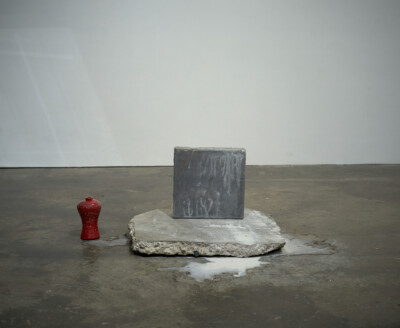
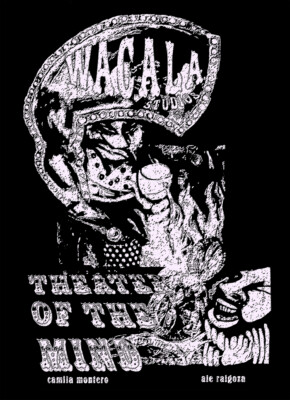
In their short stop motion animated film and installation, Theater of the Mind, Wacala! Studios (Camila Montero and Ale Raigoza) present a surrealist dinner party where masked figures watch looped dramas play out on a pearl-operated cabinet at their table. The seated guests are performed by live action human actors wearing oversized costuming that evoke Costa Rican and Ecuadorian masquerade traditions, with each character bearing exaggerated human features suggesting the embodiment of an unknown narrative archetype. On the cabinet’s stage, a series of mechanized short scenes are automated, each rendered with their own textures.
Montero & Raigoza’s strategic use of narrative fragmentation, the foregrounding of theatrical apparatuses, and evidence of how the animation has been constructed, emphasize our position as viewers of their creation. In the exhibition, the film is presented amidst an installation of the costuming and sets that the artists built and we watch the masked performers watch the scenes on their cabinet, while we are on a set ourselves–perhaps being watched in turn.
The artists’ invitation to engage with the displayed props and mechanisms further pulls back the curtain on the animation process. We are not just passively taking in the film before us, but perhaps imagining our own small dramas and scenes to be played out. We have agency to potentially shape future stories even as we are impacted by the scenes we have viewed, something to be carried into the rest of everyday life.
Wacala! Studios is a creative duo composed of Camila Montero and Ale Raigoza that have worked together since meeting in an animation class at California College of the Arts in 2024. The two utilize experimental stop motion animation to create short form films that take inspiration from their lives, the items they collect, and the conversations they have. Wacala in Spanish suggests a reaction similar to “Yuck!” or “Gross!,” expressing disgust and discomfort, feelings they embrace within their practice. Their works utilize unsettling movement and imagery and embrace a less polished animation aesthetic, leaving visible the textures of brushstrokes and assembly using discarded objects. As animators, Montero and Raigoza combine their skills and add comedy into visual manifestations of their everyday thoughts and conversations. They relate in their experiences and perceptions of what it means to be second-generation immigrants from Latin America.
About the Artist in Residence Program
The Recology San Francisco Artist in Residence (AIR) Program, a part of Recology’s Sustainability Education Program, is both an art and education initiative that provides Bay Area artists with access to discarded materials, an unrestricted stipend, and individual studio space. During their four-month residency at the San Francisco Transfer Station, artists create a body of work and host studio visits for children and adults, fostering public awareness about the importance of preserving natural resources.
Since 1990, over 190 professional artists and 60 student artists from local universities and colleges have participated, working across disciplines—including new media, video, painting, photography, performance, sculpture, and installation—to explore a wide range of topics.
Through this program, artists inspire new perspectives on sustainability by educating thousands of individuals each year about the importance of environmental stewardship.