Recology Sonoma Marin is proud to announce the grand opening of the Sorting Station, a new hands-on exhibit made possible through a collaboration with the Children’s Museum of Sonoma County.
What started as an idea two years ago is now a reality funded by a Sponsorship from Recology Sonoma Marin, crafted by the engineers at the museum, and co-created to make a cohesive vision. The exhibit is officially open to the public as of February 8, 2026, offering families an engaging and playful way to learn about recycling, composting, and environmental responsibility.
Designed for curious young learners, the Sorting Station transforms children into recycling heroes through imaginative role-play, interactive mechanics, and real-world learning. This innovative exhibit introduces kids to where materials go after collection—and how small, everyday choices can have a big impact on the planet.
“Sorting Station reflects the shared values of the Children’s Museum and Recology SonomaMarin: education, stewardship, and empowering the next generation to care for our environment,” said Collette Michaud, CEO & Founder, “This partnership allows us to bring meaningful, hands-on sustainability education directly to our community.”
“Recognizing that every member of our community learns in different ways, Recology Sonoma Marin is thrilled to partner with the Children’s Museum of Sonoma County on such a vibrant and tactile educational exhibit for children and caretakers to enjoy,” said Celia Furber, Community Relations & Sustainability Manager for Recology Sonoma Marin, adding “Not only is diverting materials away from the landfill easy, but it can also be fun!”
 What Kids Can Do at Sorting Station
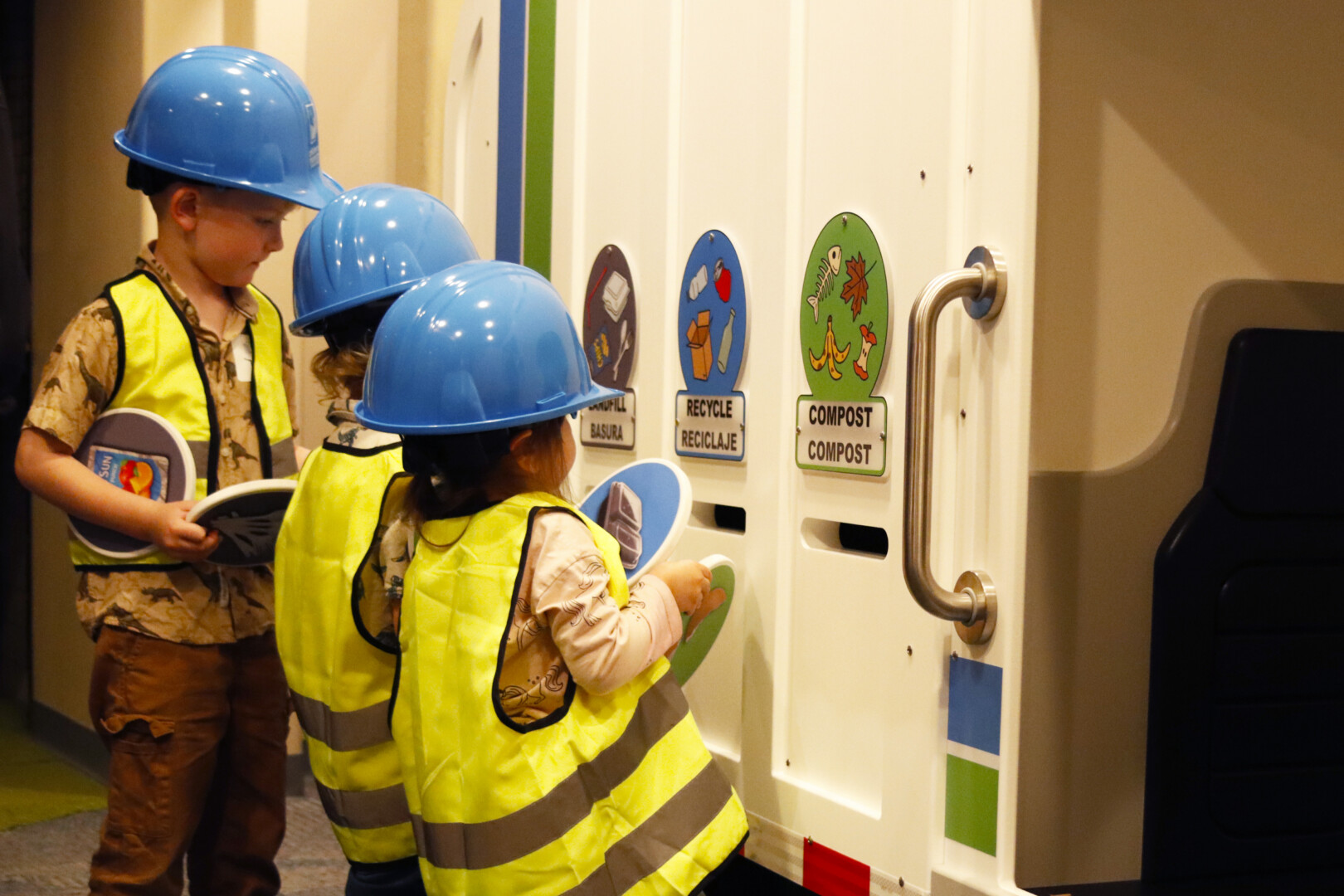
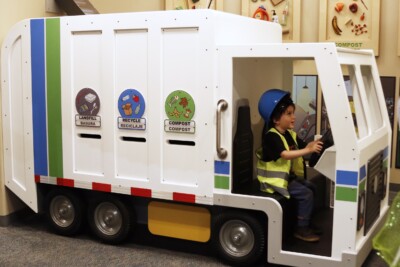
• Drive a Child-Sized Truck: Role-play as a recycling driver collecting neighborhood bins, complete with real hard hats and safety vests.
• Sort Materials: Explore everyday items—paper, plastic, food scraps, and more—and decide whether they belong in recycling, compost, or landfill stations.
• Operate a Hand-Crank Conveyor Belt: Load items, turn the crank, and watch them move along, learning about cause and effect and the steps of processing.
• Follow the Material Pathway: Interactive signage and simple visuals guide children through what happens to materials after pickup.
Visit the Children’s Museum of Sonoma County’s website for more information!